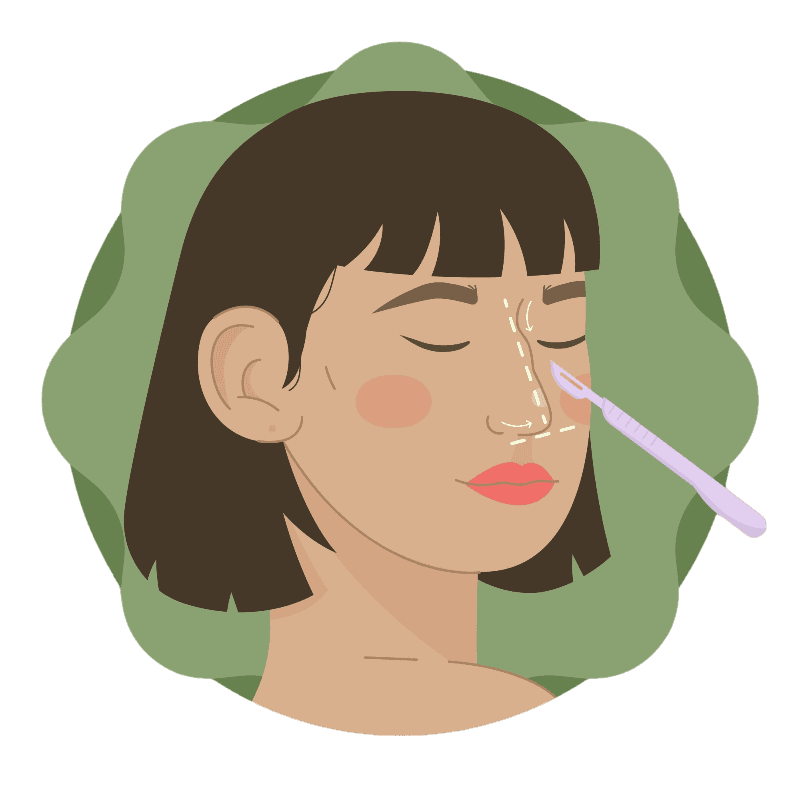
Home care:
- Avoid
hard foods that require prolonged chewing (such as sandwiches, steaks, and
barbecued meats) and foods that you know you are allergic to. - Avoid heavy
exercise such as weight lifting for about a month.
- Avoid exposure to heat
from stoves, heaters, and strong sunlight in the first few weeks. - Avoid
lifting heavy objects.
- During the first few weeks after surgery, breathing
becomes difficult due to the accumulation of secretions in the nose, so you can
use saline solution (irrigation serum) several times a day.
This is done by using a 20cc syringe without a
needle, drawing it from the head and pouring it into the nose, and allowing the
secretions to be washed and drained. - Avoid blowing your nose with pressure
for two weeks after the operation. - Usually, for 3 to 4 weeks, shape the nose
with adhesive tape as recommended by the doctor. - Be careful not to cause any
impact to your nose, for example, sleep with your head open and wear clothes
with buttons and zippers
Sneeze with your mouth open and avoid strong
facial movements while laughing and crying. - Swimming, diving, sunbathing,
sauna are prohibited for 1 to 2 months
- Avoid wearing sunglasses and
prescription glasses for a month. If necessary, attach the glasses to the
forehead with hypoallergenic adhesive.
- It is essential to maintain personal hygiene
and stay away from cold environments and people with colds. - - Take the
medications prescribed by your doctor (such as antibiotics at specific times)
as directed. If you experience the following, see a hospital or doctor -
Bleeding or swallowing blood, shortness of breath, and dizziness - - If a severe
blow to the nose has caused significant bleeding or swelling. - - Other worrisome
or emergency cases